
Introduction Indie game discovery has always been different. Unlike with many other game types that...
Welcome to metaverse: A new era of gaming
You probably remember a time when gaming felt simpler. A computer in the corner of a bedroom. A console shared with siblings. A world you entered alone, driven by imagination rather than competition.
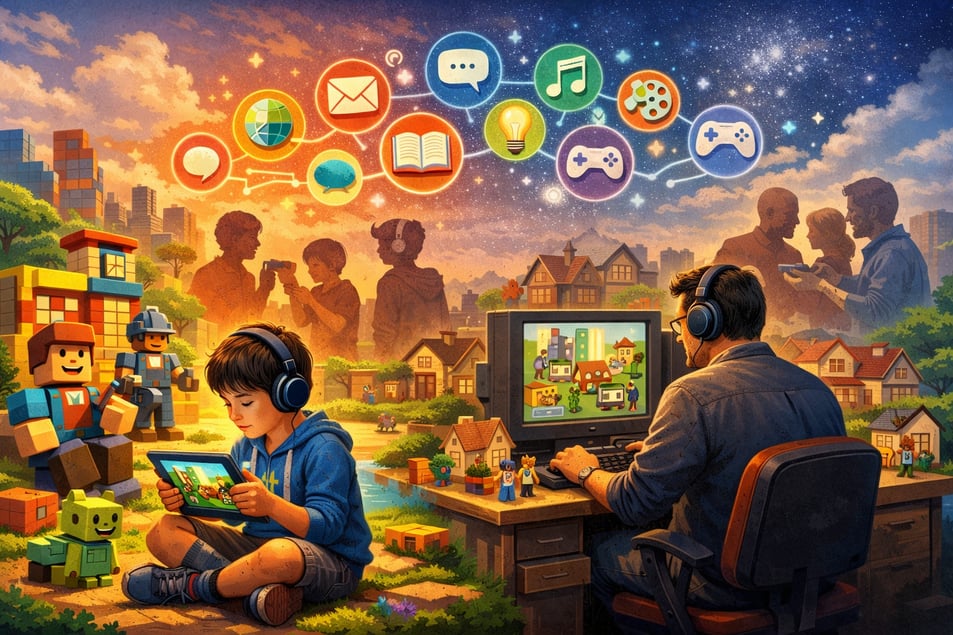
Gaming no longer belongs to one age group or one device. Today, a child might explore digital worlds through Roblox on tablet, while their parents recall building families and homes in the sims a desktop years ago. Across generations, gaming platforms have shifted dramatically from largely offline, single-player experiences to immersive, social, and always-connected digital environments.
Over the years, gaming has evolved into more than just entertainment. Online platforms now double as spaces for learning,creativity, and social interaction. Children collaborate, problem-solve, and communicate inside virtual worlds, while adults often return to games as a way to unwind, refocus, or mentally step away from daily pressure
At the same time, this increased connectivity introduces new challenges, including concerns around screen time, online safety, and emotional dependency. The world wide connectivity has bought kids around the world together for opening a free space to share and learn it comes with its own set of dangers and a set of responsibility on parents to keep their kids safe.
Then vs Now: How gaming has changed the world
For many parents today, their earliest gaming memories involve titles like The Sims.There were no rankings to chase or opponents to defeat. Winning wasn’t the goal. Imagination was. You built homes, created stories, and explored identities in a low-pressure environment that felt safe and personal. For many adults, early gaming memories are tied to creativity as sitting in there room building online houses and experimenting with animated avatars they created or it meant inviting a friend over to the house to play a game together.
When teachers who are also parents were interviewed for the podcast alongside their child they reflected on how playing sims as a teenagers provided them with emotional comfort and a creative outlet. Now as adults, playing on an Xbox now serves as a way to disconnect, decompress, and momentarily escape the pressures of adult life. Whereas, the experience when they were a teenager video games was not about winning it was about imagination.
Fast forward in 2026, and the gaming landscape is no longer limited by imagination alone. With the rise of online worlds and the metaverse, whatever players can imagine, they can now build, share, and experience in real time which is easily accessible to kids through tools like Roblox Studio. Gaming has shifted from a solitary creative outlet to a connected digital ecosystem as these parents are immersing themselves in the experience alongside their children while building games with there kids.
As Forbes explains, the metaverse blends gaming, social interaction, and digital creation into persistent online spaces that extend far beyond traditional gameplay.
For today’s parents, this shift is most visible through their children. Gaming is no longer something kids do alone. it is social, connected, and deeply embedded in their daily lives. Some parents approach this change with concern. Others choose curiosity, stepping into these digital worlds alongside their children to better understand what draws them in.
Roblox through child’s Perspective: Fun, Emotions and Friendships
When you ask a child why they love Roblox, the answer isn’t about technology. It's about how they feels.
In the podcast interview with a young Roblox player (age 9 years), the excitement was immediate. Roblox was described as fun, relaxing, and social. a place to play with friends, build worlds together, and the ability to play with classmate no matter how far they lived. Playing with others mattered far more than playing alone.
Roblox offers children opportunities to explore creativity, collaborate with peers, and experiment with virtual identities. These experiences can support imagination and social confidence.However, the interviews also highlighted that children may not always distinguish clearly between online and offline boundaries, particularly when forming new connections in digital spaces.
This duality reflects the broader reality of online gaming for kids. It can foster creativity and friendship, while also exposing young players to environments they may not fully understand. The emotional impact of gaming at this age is deeply tied to social belonging a powerful motivator that shapes how children experience digital worlds.
When Metaverse becomes: Risk, Concerns and Boundaries
As gaming becomes more immersive and social, concerns naturally follow. Parents and educators interviewed for the podcast emphasized that the issue isn’t gaming itself, but the environments children are navigating.
“ What would make me feel more comfortable as a parent is knowing exactly who my kid was playing with or against. Having a child log in with their voice or face would be a helpful feature to avoid impersonation. ”
The TVO documentary Dangerous Games: Roblox and the Metaverse Exposed highlights risks related to online safety, data privacy, and monetization in child-focused gaming platforms. The documentary investigates the darker realities of online gaming platforms used by children.The documentary highlights risks such as grooming, exposure to harmful content,and insufficient moderation in large, user generated environments. It emphasizes that platforms are designed for play, they are not always designed with child safety as the top priority.
Educators interviewed stressed the importance of balance rather than restriction. Screen time, when discussed openly and guided thoughtfully, can be managed in a healthy way. Parental awareness plays a crucial role not only in setting boundaries, but in understanding the platforms children are using and why they matter to them
Conclusion: Finding Balance Across Generations
Gaming has changed, but the human need behind it has not. Whether it’s a teenager building a virtual household in The Sims or a child laughing with friends in Roblox, digital play continues to serve as a space for emotional release, creativity, and connection. Listening across generations reveals that gaming is not inherently good or bad but its impact depends on context, guidance, and balance.
Healthy engagement comes from understanding why people play, not just how long they play. By acknowledging both the opportunities and the risks of online worlds, families and educators can support more mindful digital experiences. When approached with awareness and balance, the metaverse and online gaming spaces can offer not just escape, but meaningful connection and growth.