Introduction: A New Era of Gaming Influence Gaming in Canada is evolving faster than ever — and not...
Gaming is often described as a universal experience, something anyone can pick up and enjoy. But that promise quietly breaks down the moment a controller assumes two steady hands, quick reflexes, or the ability to repeat the same movement for hours without pain. Much of the gaming industry relies on these assumptions, and they quietly decide who gets to stay comfortable and who has to work harder just to keep up and exist in digital spaces most of us move through without thinking.
You begin to realise what exclusion looks like in digital spaces. Sometimes it shows up as discomfort, sometimes it looks like exhaustion, sometimes it looks like slowly playing less and less until you stop altogether. For millions of players, the issue isn’t skill or interest; it’s that the game was never designed with them in mind.
Gaming is often framed as entertainment, but it is much more than that. Games are social spaces, creative outlets, and cultural touchpoints. Multiplayer games create friendships. Online worlds build communities. Yet accessibility barriers are often created, not through intent, but through default design choices that assume a single type of player. When those assumptions go unchallenged, accessibility becomes an afterthought rather than a standard, and exclusion becomes built into play itself. That’s where adaptive technology and the conversation around it become impossible to ignore.
The Illusion of “Everyone”
When people talk about accessibility in gaming, it’s often framed as something niche or specialised. There is a common assumption that accessibility only applies to people with severe disabilities. In reality, accessibility affects far more people than we tend to acknowledge. Accessibility in gaming includes anyone who experiences difficulty with standard game design, whether due to limited hand mobility, neurological conditions, chronic pain or fatigue, temporary injuries, or sensory differences. These experiences exist across age groups and life stages. They aren’t rare exceptions; they are part of human diversity.
The gaming industry has made major technological advances, but accessibility has often lagged behind innovation. The World Health Organisation reports that over 2.5 billion people globally need at least one form of assistive technology, yet only 1 in 10 people have access to the products they need. By 2050, that number is expected to rise to 3.5 billion due to ageing populations and increased chronic conditions. These numbers alone challenge the idea that accessibility is a fringe concern.
During my research, I kept returning to one realisation: ‘It wasn’t that people lacked ability; it was that systems weren’t built for them’. Accessibility gaps often exist not because someone can’t play, but because design choices assume a single “default” player experience.
When Design Assumptions Become Barriers
Most standard game controllers assume two-handed use, fast reaction times, and repetitive movements sustained over long periods. For many players, these assumptions work seamlessly. For others, they slowly create fatigue, discomfort, or frustration.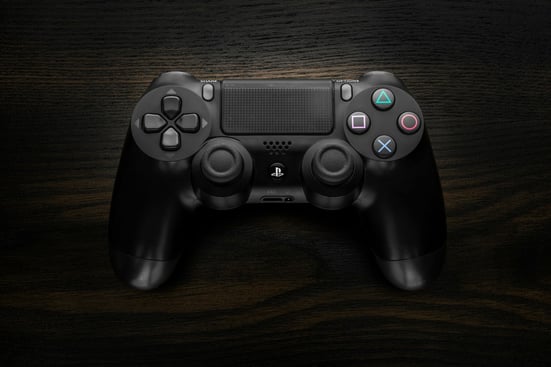
A picture of a standard controller. (Photo by Garret Morrow)
What often goes unnoticed is that many games remain technically playable even when they are inaccessible. A game might run perfectly, but require button combinations that are physically exhausting. It might demand reaction speeds that leave no room for neurological variation. Over time, these design norms can quietly push players out.
As I reflected during the interview, “If technology isn’t accessible, it creates barriers everywhere; in education, healthcare, employment, and even entertainment.” Gaming is no different. Design decisions that seem neutral often carry consequences that only become visible when someone doesn’t fit the assumed user profile.
This isn’t about placing blame on developers. Many of these barriers are rooted in legacy systems and long-standing design conventions that haven’t evolved alongside the diversity of players.
Adaptive Technology and What It Makes Possible
Adaptive technology offers a different way forward. In gaming, it includes customizable controllers, alternative input methods, and software-level adjustments that allow players to interact with games in ways that work for them.
Conceptually, adaptive technology shifts the relationship between people and systems. Assistive technology is designed to adapt systems to users, rather than forcing users to adapt to rigid systems. When technology works this way, it enables comfort, longer play sessions, and independent participation. Eye-tracking software, speech-to-text tools, adaptive controllers, and AI-driven interfaces all fall under this umbrella.
Despite this potential, adaptive technology still isn’t widely used. Cost is a major factor; many adaptive tools are expensive, and funding or coverage isn’t always available. However, access issues go deeper than price. Complexity often plays just as large a role. Many tools require long setup times, training, or constant adjustments. Availability alone doesn’t guarantee access. If something is difficult to learn or exhausting to maintain, it often goes unused. This is where accessibility intersects with broader issues of digital equity.
Access and Dignity In Gaming
Access to adaptive technology affects more than gameplay mechanics. Design decisions carry emotional consequences. They shape confidence, independence, and a sense of belonging. When people can interact independently in digital spaces, it changes how they see themselves and how others see them.
On the other hand, lack of access often leads to frustration, fatigue, and quiet withdrawal from gaming communities. Players stop joining the sessions, stop exploring new games, or disengage altogether.
This is why dignity matters in design. Technology that draws attention to difference or feels overly clinical can discourage long-term use. As noted in the interview, “Good design supports people quietly and respectfully.” When tools feel natural and unobtrusive, they allow players to participate without feeling labelled or singled out.
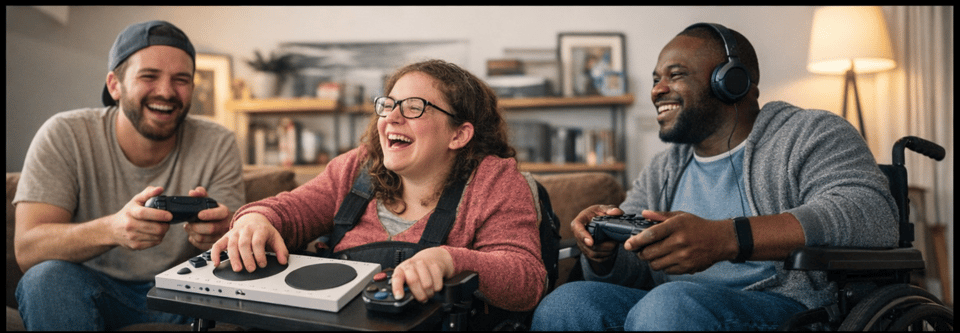
A picture of a woman playing with her friends while using adaptive technology. (AI created)
Who Gets to Play and Who Decides?
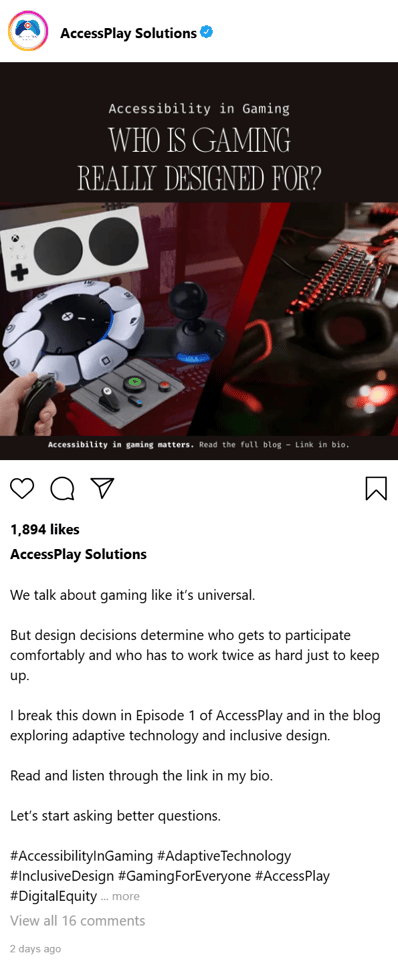
As gaming continues to shape culture and connection, it raises a simple but powerful question: who are games really designed for and who gets left out as a result?
Accessibility isn’t about special treatment or sympathy. It’s about recognising that participation should never be conditional on fitting a narrow definition of ability. Disability is part of human diversity, and adaptive technology is simply a tool for participation.
There has been progress. Accessibility is becoming part of broader industry conversations, with more inclusive settings appearing in some games and increased advocacy driving change. Still, progress remains uneven. One of the biggest challenges isn’t technology, it’s perception. Accessibility is often treated as an optional feature rather than a baseline expectation.
Inclusive design improves experiences for everyone. It expands who gets to belong in gaming spaces and challenges the idea that accessibility is a compromise rather than an improvement.
Primary Research: https://drive.google.com/file/d/1HEiVVzZ0CnnqIB75DxbsCYm-i8bCpB2M/view?usp=drive_link
YouTube Shorts Post:
Podcast:
Short-form video:
Social Media Post: