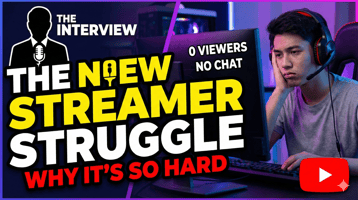
Imagine this. You spend hours setting up your stream. You turn your microphone. You look at your...
When Learning Feels Interactive & Fun: How Videogames Are Reshaping Education
Rethinking What Learning Looks Like
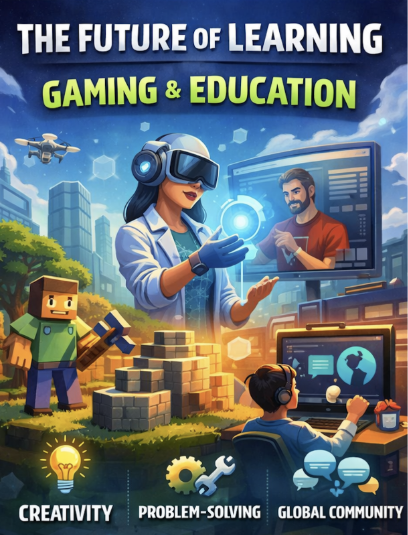
For decades, learning has been associated with classrooms, textbooks, and structured assessments. At the same time, video games were often dismissed as distractions or activities that offered entertainment but little educational value.
Today, that perception is changing. With the rise of interactive technologies and digital platforms, gaming is increasingly being recognized as a powerful learning environment. Educational gaming platforms are no longer just games, but such platforms are spaces where creativity, collaboration, and problem-solving thrive.
This shift raises an important question:
What if some of the most effective learning today is happening while people are playing?
Gaming as a Modern Learning Environment
Unlike traditional education systems, games do not explicitly announce learning objectives. There are no formal exams, yet players constantly engage in complex thinking processes. They analyse situations, make decisions, adapt strategies, and learn from failure.
In games, learning happens naturally through experimentation, problem-solving, and through continuous feedback.
Educational videogames are a strong example of this shift. In its education-focused version, learners can solve technical problems of Engineering, Computer Science, and solve real-world challenges. Instead of memorizing concepts, they experience them.
This form of learning is highly engaging because it removes the pressure often associated with traditional education and replaces it with curiosity and exploration.
Learning by Watching: The Role of Streaming
Another major transformation in education comes from the rise of streaming platforms such as YouTube. Learning is no longer limited to direct participation and people now learn simply by observing others.
During primary research, a student and gaming enthusiast shared:
“If a new game launches, I watch gameplay videos first to understand how it works.”
This behaviour highlights an important trend. Watching gameplay is not just a passive entertainment but it is a form of observational learning. Viewers analyse strategies, understand decision-making processes, and apply those insights when they play themselves.
Streaming platforms function as informal classrooms, strategy guides, and learning communities.
They allow learners to access knowledge instantly and visually, making complex ideas easier to understand.
The Psychology Behind Learning Through Play
Educational research supports the idea that people learn best when they are actively engaged. Gaming environments are built around trial and error, which is one of the most effective learning methods.
Players are encouraged to take risks, make mistakes, and try again with improved strategies.
This process builds resilience and critical thinking. According to insights highlighted by The New York Times, learning becomes more effective when individuals do not feel pressured or forced.
A student interviewed during this research explained:
“It’s mostly entertainment, but learning is also a big part of it.”
This reflects a key idea:
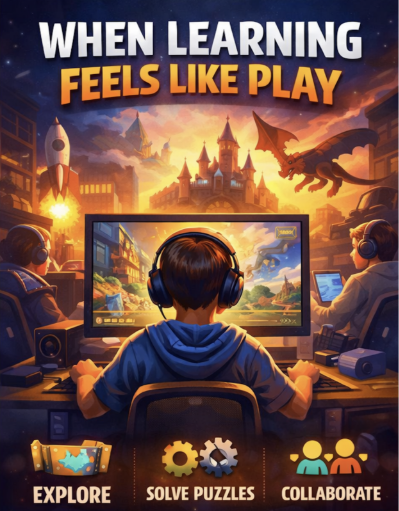
When learning feels like play, it becomes more natural and impactful.
Social Learning in Gaming Communities
One of the most powerful aspects of modern gaming is its social dimension. Multiplayer environments encourage collaboration, communication, and shared problem-solving.
In educational gaming communities' players often work together to build structures, share ideas and strategies, and learn from each other’s experiences.
The same student shared during the primary research:
“I mostly play multiplayer games… it helps me connect with people.”
This highlights how gaming creates global learning communities, where individuals exchange knowledge and develop interpersonal skills.
Social interaction transforms learning from an individual activity into a collaborative experience, making it more engaging and meaningful.
Balancing Entertainment and Productivity
Despite its benefits, gaming is often criticized for being time-consuming or distracting. Concerns around excessive screen time and productivity remain valid.
The same interview participant acknowledged that:
“Sometimes you lose track of time… it can feel unproductive.”
This emphasizes an important point:
Gaming itself is not inherently beneficial or harmful. Its value depends on how it is used.
With intentional use, structured time, and purposeful engagement, gaming can become a powerful educational tool rather than a distraction.
The Future of Learning: Where Gaming Meets Education
As technology continues to evolve, the role of gaming in education will only expand. Innovations such as artificial intelligence and personalized learning systems are expected to make gaming experiences even more adaptive and effective.
Platforms like Minecraft already demonstrate how immersive environments can support creativity, problem-solving, and real-world skill development.
At the same time, streaming platforms and digital communities will continue to shape how learners' access and share knowledge.
Rather than replacing traditional education, gaming is becoming a complementary system that enhances how people learn.
Conclusion: Learning Is Already Evolving
The idea that learning only happens in classrooms is no longer accurate. Today, learning occurs across multiple environments—games, streaming platforms, and online communities.
Gaming allows learners to observe, experiment, collaborate, and adapt.
These are the same skills required in real-world situations.
The next time gaming feels like “just play,” it may be worth reconsidering.
Beneath the surface, a powerful form of learning is already taking place; one that is interactive, engaging, and deeply effective.
Ready to explore the future of learning?
Follow Neovrse Edu for more insights on gamification, digital learning, and skill development.