Everyone fantasises about what they want to achieve in life. Everyone can somehow muster the courage to chase that dream of theirs. Because it is possible, or rather because they have the bare minimum to make it to the starting point, even if they didn’t get to the end. What nobody fantasises about is when reality seems like a shadow. You can think about walking because you have a leg, but what happens when you have a leg, and it cannot walk? Worst, so when you have tasted what it means and feels like to walk? That is Life, being a shadow of reality you once knew. Also, the human brain is known as one of the most sophisticated networks in the world, so much so that it protects us from danger consciously and unconsciously, at birth and in old age. However, what happens when these same systems stop and start putting us in danger? Where the decision is made, that has put you through life, has to be checked and approved by another brain? Where, what makes you, You ceases to be you anymore? Then, that is Life being a shadow of reality you once knew.
What is stroke ?
Stroke, in simple terms, could be said to be a leakage of blood from a blood vessel to any part of the brain, causing partial or permanent brain damage to that area. It can also be defined as a loss of oxygen to various areas of the brain, leading to the stoppage of the function of that part of the brain.
Types of Strokes
Ischemic Stroke- Derived from the word ischemia, meaning lack of oxygen. This stroke is caused by a stoppage or blockage of blood to that part of the brain, leading to the death of that part of the brain due to a lack of oxygen and nutrients to that part of the brain. 87% of all strokes are of this type.
Hemorrhagic Stroke-Derived from the word haemorrhage, which means bleeding due to damage to the blood vessels. This stroke is caused by damage to the blood vessels leading to bleeding in the brain, resulting to lack of oxygen and nutrients to the brain. Additionally, the blood on the brain causes pressure and irritation in the brain, leading to more brain damage.
Causes and Risk Factors of Stroke
- Smoking and Drinking
- Sedentary Lifestyle
- High-fat diets
- Old Age
- Certain drugs
- High blood pressure
- Obesity
- Diabetes
- Heart Diseases
Signs and Immediate Effects of Stroke
- Paralysis to the side of the face and the affected part of the limbs.
- Trouble with speech and coordination.
- Problems with vision, sometimes blackouts, loss of vision.
- Drooping at times.
- Fainting and loss of balance.
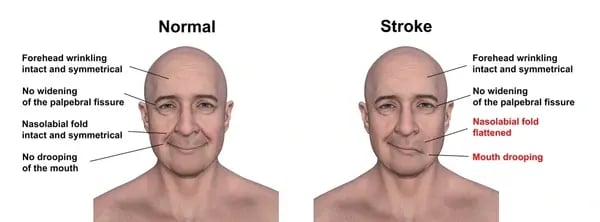
Source: Shutterstock images. The Before and after photo of a man with a stroke.
Life After Stroke: Why the “Shadow” Feels So Heavy
- Loss of independence is one of the biggest challenges with a stroke patient. The person feels like a child and is disgusted, especially by the paralysis that comes with the limbs.
- Changes in identity and confidence. Confidence becomes low since you are incapable of doing what you know how to do again.
- Emotional and psychological impact, such as depression, wishing you were dead rather than alive and enduring this suffering.
- Social withdrawal and isolation because you feel less of yourself, considering your low level of activity after the stroke could make you less sociable. This makes your mental state worse.
What is a Mental Health Disorder?
Amental health disorder, also known as a mental illness or psychiatric disorde
r, is a hereditary or acquired condition that threatens the way you think and behave. This
could be demonstrated in how you express and regulate your emotions. Mental health conditions cannot be cured, but can be greatly managed to the point that they are reduced to the barest minimum. Everyone can act out or be weird sometimes, like being too furious, excited, or sad. However, what makes it different or not to be considered as a mental health issue is the ability for the person to regulate themselves in such a way that it does not affect the person’s livelihood, social or family. Having said that, it doesn’t disprove the fact that only a psychologist or psychiatrist can determine if someone truly has a mental health disorder.
Causes of Mental Health Disorders
It is biopsychosocial
- Biological issues, such as genes, physical illness, injury, or brain chemistry
- Developmental experiences, including adverse childhood experiences, trauma or abuse
- Social issues, such as poverty, unemployment, job stress, or loss through death or divorce
Symptoms of Mental Health Disorder
- Hallucination
- Depression
- Memory problems
- Changes in sleep patterns
- Behaviors that are harmful or disturbing to oneself or to others
Epidemiology of Mental Health Disorder
In 2021, nearly 1 in every 7 people (1.1billion) around the world were living with a menta
l disorder, with anxiety and depressive disorders the most common. We know that 50% of people who develop a psychiatric illness have symptoms of a disorder before age 14, and 75% will have symptoms by age 25. All ages are susceptible, but the young and the old are especially vulnerable.
Diagnosis of Mental Health Disorder
A Psychologist or a psychiatrist is a professional who can diagnose and treat mental illnesses. Some mental health illnesses are preventable, while others can be very tricky to diagnose. Mental health intervention professionals work with vulnerable citizens of society who are experiencing social exclusion to help regulate their emotional distress, too.
For example, how do you know that a child with autism is having a mental health disorder and not the features of the developmental disorder? Another example is that depressive symptoms can relate to a thyroid condition. Therefore, a mental health diagnosis often involves a full health evaluation, including a physical exam. This may include blood work and/or neurological tests. One of the biggest challenges of mental health disorders is the fear of being discriminated against, which causes more problems, such as exacerbating the mental health illness.

Source: here for Texas. The difference between mental health and mental illness.
Life With Mental Health Disorder: Why the “Shadow” Feels So Heavy
Imagine a mother going through the pains of childbirth, and after that, she is stressed so m
uch that she wants nothing to do with that baby. She feels irritated, sad and wants to be left alone. To crown it all, she loves children, and she was excited to see her baby, but after the childbirth experience. She changed into a different person. This is a mental condition called postpartum
depression. Now, to the common man, she is a bad mother who can't hide pretense anymore. To the mother of the child, I am a bad mother. Why do I feel the way I feel? To the professionals, she has a condition that affects one in every 8 to 10 women. This is how “reality feels like a shadow for most mental health disorder patients”.
Want more insights like this delivered to your inbox? Join hundreds of subscriberswho receive our weekly email newsletter! Get actionable tips for your healthand wellness. Click here to join."