
Many newcomer parents remember their first parent–teacher meeting in Canada by the sudden tightness...
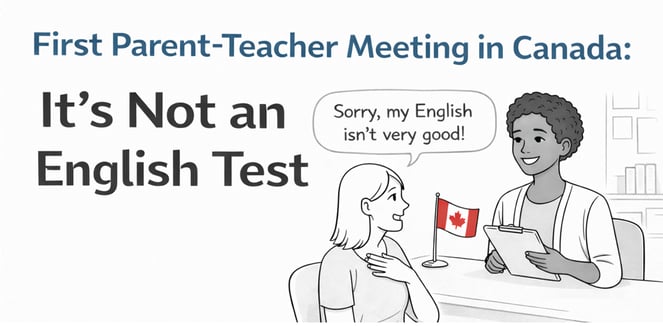
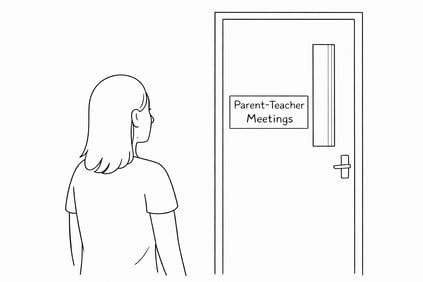
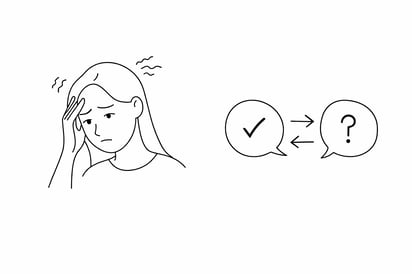
Many newcomer parents remember their first parent–teacher meeting in Canada by the sudden tightness in their chest. Even after preparing and rehearsing in advance what to say, anxiety may quickly take control once they sit before the teacher. Will my English be good enough? Will I understand everything the teacher say? Will I be misunderstood or judged? Some parents also worry that their own language struggles might cause their child to “lose face” in front of the teacher.
Why the First Parent–Teacher Meeting Feels Especially Stressful?
To most new immigrant parents with limited English, the tension of a first parent-teacher meeting is not only about language. It is dealing with new ways of communication, cultural differences and parental roles, and all at the same time. According to Canadian Immigrant, new comer parents often describe school involvement as daunting, citing cultural differences, lack of English skills, and lack of knowledge about the Canadian education system and expectations. Many worry about whether they will be welcomed or judged negatively.
Susie Zhang is a new parent who has came to Toronto to support her son’s high school education, recalls her first parent teacher meeting. “I was afraid of saying the wrong thing. I did not want the teacher to believe that I was acting carelessly, yet I was not aware how to present and answer the questions in a proper way using English”. Susie did not concentrate on her child development but instead she had to replay the conversation that had just occurred, what she heard, what she missed and what she never said but should have. She walked out of the meeting room feeling frustrated, guilty and depressed.
This is not an unusual experience. Canadian Immigrant also underlines that involvement of parents, regardless of language ability, has a positive impact on students’ academic performance, attendance, and long-term outcomes. It is not about parents communicating in a good enough English language, but whether they feel confident enough to participant. Regrettably, some parents fear to communicate and thus they withdraw or avoid attending the school meetings.
What Parent–Teacher Meetings in Canada are like — Why You Don’t Need to Understand Every Word?
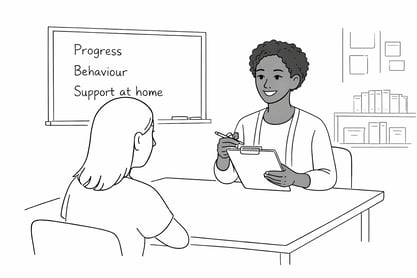
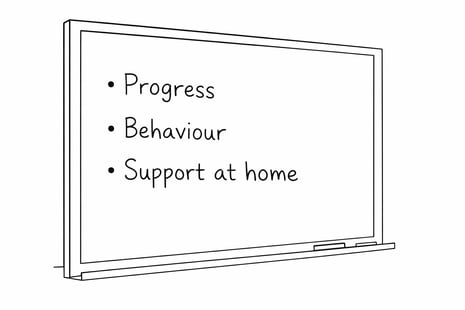
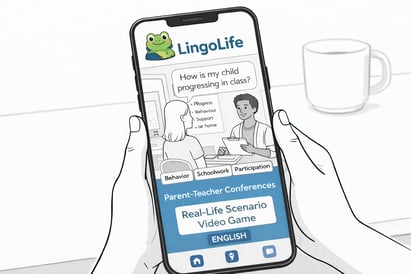
The content of parent–teacher meetings in Canada are normally predictable. The majority of the meetings take not much time, usually about ten minutes, and are devoted to various aspects, which are central: academic progress, classroom behavior, and the way parents can contribute to support at home. Teachers normally guide the conversation and proceed step by step to these topics.
The purpose of these meetings is not to evaluate parents, but to share information. It is common that the teacher will usually mention the strengths of a student first before highlighting the issues the student needs to improve. Questions such as “How is your child adjusting?” or “Have you noticed any challenges at home?” are meant to invite collaboration, not to put parents under pressure. For many newcomer parents, simply understanding this can be reassuring and relieving.
One of the causes of anxiety is fear of not comprehending everything that the teacher is saying. The fact is that it is usually more significant to understand the general message rather than translate each sentence to perfection. It is possible to identify what words are repeated over time, like: “making progress or needs more support”, so that parents remain on track despite some of the details being missed. Communication will be much less daunting when parents are familiar with the structure of parent–teacher meetings and understand the content and intent behind teachers’ language. These are skills that can be developed more easily through scenario-based practice.
Why Real-Life Scenario Preparation Works Better Than Memorizing Sentences?
Many parents attempt to be ready to the parent-teacher meetings by rehearsing with sentences or writing the “perfect” answers. Although this can provide short-term comfort, in practical discussions, it tends to fall apart. Conversations are interactive and the teachers will modify the questions depending on answers. Memorized phrases can soon become ineffective when the discussion takes a new turn.
Adult learners often struggle more in high-pressure communication environments, making it difficult for effective learning. Hanna Zhang, a game industry professional with extensive experience in user engagement design, explains that adults are not incapable of learning, but they are more likely to lose confidence when they feel judged or unable to predict what comes next. Anxiety as a pressure interferes with attention and decreases the effectiveness of learning.
In comparison, the practice based on real-life situations will reduce uncertainty and pressure. The comprehension and implementation becomes simplified when the learners know why they are learning and what to expect next. The preparation of scenarios provides the feeling of control and familiarity and makes the practice more of exploration and less of intimidation.
How Gamified, Scenario-Based Practice Helps Parents Build Confidence?
In addition, traditional ways of learning English often feel boring and stressful, which can cause frustration to build up and eventually lead adult learners to give up. Gamified learning, by contrast, creates a more relaxed and enjoyable environment in which failure is not treated as a mistake, but as an expected part of the learning process. Hanna Zhang notes that the video games designed to encourage players to try repeatedly, learn from feedback, and improve without fear of being judged.
Once this attitude is translated to learning, the fear of mistakes is greatly diminished.
Low-pressure, fun, and repeatable practice creates what Zhang describes as a “safe rehearsal space.” She compares it to a video game’s tutorial or beginner zone, where players get to learn the flow of the game first, before facing real challenges. For newcomer parents, practicing conversation in the relaxed setting will help them decrease anxiety levels in the case of similar situations in real life.
This is supported in academic research. A 2024 research article in Education Sciences discovered gamified learning environments to lead to higher motivation while reducing cognitive load. In case learning is organized, actual and interactive, then chances are high that learners remain active and continue. So an English learning video game tool built on modern game design principles can support sustained practice by making learning feel easier and more engaging, helping learners effectively improve their English skills over time.
Confidence Comes from Feeling Prepared—NOT from Perfect English
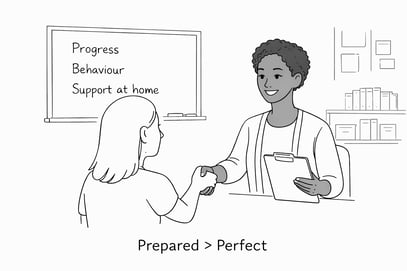
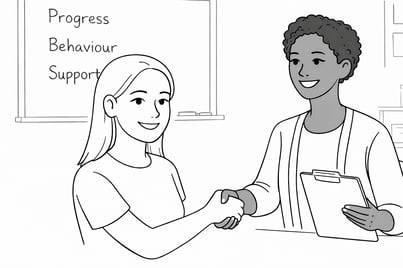
Being able to speak perfect English does not give confidence. It is a result of knowing what is going on and and trusting one’s ability to respond well. When parents understand what a parent-teacher meeting usually involves and become familiar with common language patterns, anxiety will naturally reduce.
When parents shift their focus from “Did I say this correctly?” to “I feel confident participating in this conversation,” meaningful communication naturally follows. It is not necessary to have perfect English speaking parents. By staying present, engaged, and willing to participate, they can show up as supportive partners in their children’s education. This confidence can be more easily generated and sustained in learning environments that are motivated by game design, where the practice feels enjoyable and progress is clearly visible.
In the following video, Hannah Zhang, an Business Manager in the video game industry with experience in game mechanics and effective learning design, shares insights on why adults often feel anxious in second-language communication — and how scenario-based, low-pressure environments can reduce that stress and support effective learning.