On the surface, live streaming is easy and can be summarized in as: open a camera, play a game,...
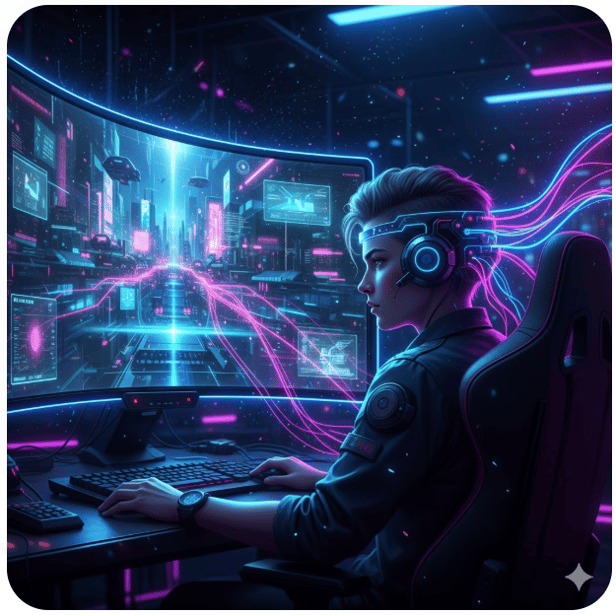
Your Brain Is the Next Controller; What Neurogaming Means to the Future of Play
When I first encountered a video game controller, I recall the feeling of strength I had in being able to command a world with a pair of hands. There are a few buttons which could help a character to jump, run, fight, or fly. The same sense of control returned several years later - except this time, with a weird question in my mind What if I did not need my hands at all?
Suppose the future of gaming was not in the form of more advanced graphics, high-speed processors, but the human brain?
This is the fundamental concept of a so-called neurogaming, a relatively new area that examines how games can react directly to brain activity, emotions, and mental conditions.
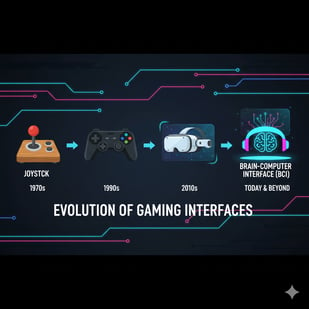
Joysticks to Brainwaves: A Short History of Control
It has been all about interaction in gaming. During the 1970s, it was basic joysticks. Then on came keyboards, game controllers such as the Wii, VR goggles that monitor our physical movements.
Every action brought the players nearer to the game world. but every one of them is still dependent on the body.
Neurogaming changes that.
Players no longer have to press buttons but rely on electrical brain activity. Brain–Computer Interfaces (BCIs) are devices that capture the brain signals, by measuring brain activity (usually the EEG headset), and converting them into computer commands.
To put it simply: your thoughts get input.
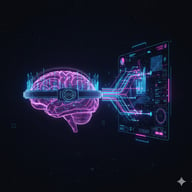
What Is Neurogaming, Really?
Neuro gaming is a category of video games that responds to the activity in the brain of the player. These systems do not read minds as sci-fi does but they monitor brain waves patterns of focus, relaxation, or stress.
Different electrical signals are generated by different mental states. For example:
The extreme attention produces some wave patterns.
The presence of stress and fatigue forms others.
ABCI is capable of identifying these alterations and transmitting such information to a game.
The game reacts not to what you press it reacts to how you feel and think.
First Reaction of a Gamer: Primary Research.
During self-reflective interview, which was carried out in the context of this project, I told about my initial response to the concept behind the brain-controlled games:
Initially, it was more of a science fiction. I was not able to understand how a machine can be aware of what is going on in the brain. However, I then came to know that the brain already announces electrical messages to the body. Why not the brain signals, as long as machines can recognize the heartbeats and the movement of the muscles?
The idea was not only the technology itself that was so powerful, but the change of control.
The hands are no longer able to bring about control. It comes from the mind. The game is a response to you, not to what you are doing.
This is what makes neurogaming different as compared to traditional gaming. It does not have to do with quicker reflexes. It is about consciousness, attention and concentration.
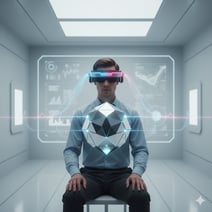
Real Life Case Studies That Are In Existence.
This isn’t just theory.
An example of an early consumer is the toy game Dark Force under Mindflex, which is played with an EEG headset. Players are capable of controlling a floating ball through concentration. The more the brainwaves are focused the higher theball rises (Dooley, 2010).
Itis easy, yet it demonstrates of some significance:
As cheaply as technology can be made, it is possible to translate brain activity into a game.
There also are scientific applications of it: Scientific American, where individual scan control the wheelchair, type on screens, or move items using only the brain signals, with a 70-90% accuracy rate after training (Pogue, 2012).
These systems are already assisting physically challenged individuals to communicate with the digital platforms.
Neuro gaming is no longer experimental. It’s functional.
Reasons Why Neurogaming Feels Different.
The skill in traditional games is counted by the speed and the control.
Neuro games are a measure of mental states.
Imagine game that:
Becomes more challenging when in concentration.
Works slowly when you are stressed.
Modifies the level of difficulty depending on emotional fatigue.
This was the thought that I had during the interview:
Whether game reacts to focus or not, the skill incorporates focus. Players are made more conscious of their mental state.
This makes gaming more of a psychological ordeal rather than physical.
It also brings with itself something new: self-awareness as gameplay.
Accessibility and Inclusion.
Accessibility of neurogaming is one of the most significant things.
Traditional controllers may be an obstacle to physically challenged people. The barrier is eliminated by BCIs.
It would provide people with new freedom. They were able to communicate, learn and play using the thoughts alone.
In this respect, neurogaming is not only a question of entertainment, but of equal access to the digital world.
The Ethical Side: Who Owns your brain Data?
There are grave issues with great technology.
Brain information is highly confidential. It may disclose the feelings, stress, and thinking patterns.
One of the issues in the interview was as follows:
Profit should not be first before ethics. There should be strict rules in the protection of brain data.
Would it be a mind-state controller who controls games in order to keep track of them?
How is it stored?
Who can access it?
Neuro gaming would become empowering to invasive in absence of transparency and regulation.
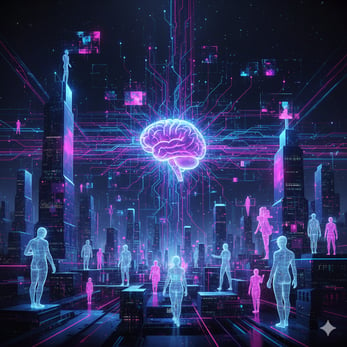 The Future of Neurogaming The Next 10 Years.
Itis highly unlikely that neurogaming will be as much as a replacement of controllers, but will introduce a new dimension.
Possible opportunities in the future:
Emotional response VR worlds.
Stories about AI influenced by mental interaction.
Training the mind via playing.
In the interview, I concluded:
Better graphics are not the only way the future of gaming can be improved. It is more of an attachment to the human mind.
Final Reflection: Are We Ready to Play With Our Minds?
Gaming began with pixels on the screen. It transformed itself into digital worlds that are immersive.
At this point, it is growing closer to something even more in a direct relationship with human consciousness.
What is also compelling about neurogaming is that it makes us reconsider the meaning of playing.
Not merely the act of governing characters - but knowledge of ourselves.
Whether neurogaming will exist or not is not the real question.
It already does.
The real question is:
Are we prepared to have our minds involved in the game?
https://www.instagram.com/neuroarcgaming?igsh=ajFqNXo0OWl6ajdw&utm_source=qr
SEO Elements
Title Tag:
Your Brain Is the Next Controller: The Future of Neurogaming.
Meta Description:
Learn how neurogaming and brain-computer interfaces might change the future of videogames by linking the real-world to the human mind.