Fitness has evolved in ways that would have been unimaginable just a decade ago.
When Fitness Feels Like Play: Why Some Women Stick with Games Longer Than the Gym
You said you were going to the gym tonight. You don’t want to. It’s 9:38 p.m. on a rainy Thursday evening and there you are; still in your work clothes. Your laptop is still warm from work. There’s laundry on the couch, dishes in the sink, and your reeking gym shoes are by the door, which is exactly where you placed them last night. The idea of changing, commuting, and standing under a fluorescent light with the sweaty presence of strangers is already quite exhausting. So, you scroll. Instagram, TikTok, a few dance videos and suddenly you see someone in their VR headset laughing. They are dancing around their living room sweating profusely with neon lights flashing in the background. It does not look like a workout routine. It looks fun. And for a split second, you wonder: Why does it look easier than it ever did at the gym? The answer might be simpler than you think. The fitness gaming industry according to Fitness Gaming Market Research Report 2033 has evolved into a space where interactive movement and entertainment intersect and it's changing how women approach consistency.
"Why does traditional exercise feel boring”?
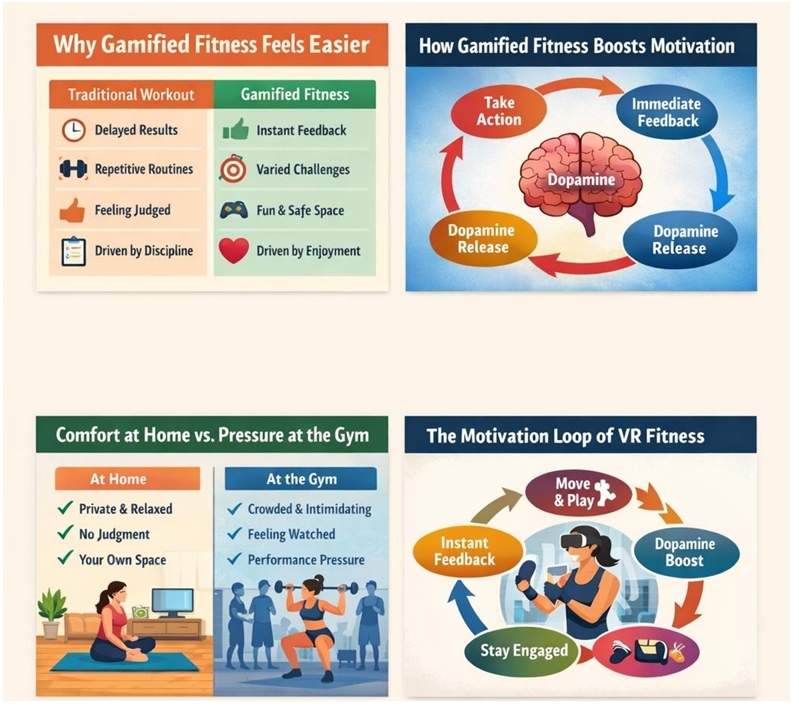
Annabella remembers that feeling vividly but not as an epiphany but rather as something very familiar and quiet. Before motion-based fitness games entered her routine, she did what exercise culture usually prescribes. She signed up for gym memberships, ran on treadmills, followed weight routines that were supposed to build discipline and deliver results. “I used to go,” she tells me. “But I skipped some days because I wasn’t in the mood. It got repetitive and boring.” Initially, she thought that the problem was that she was not motivated and therefore tried to make up for it by setting bigger goals. “I’d tell myself, ‘Okay, I’m going to run three miles, do a thousand push-ups,’” she says, laughing. “Girl! I’m not even doing half of that.” On paper, everything was perfectly alright. The workouts were legitimate, the equipments worked, the goals were lofty and honestly this is what “doing fitness right” was supposed to look and feel like. However, the experience itself felt empty, predictable, repetitive, and easy to delay. Good intentions could be eroded by boredom quietly. From the moment exercise feels like something you should do rather than something you want to do it suddenly becomes one more task competing for limited energy at the end of a long day. If you’re balancing work, school, relationships, and mental load, you already know how this unfolds. First, you skip one day because you’re tired. Then another because you’re busy. Soon, the shoes will stay by the door. Not because you don’t care about your health. But because the activity itself gives you nothing back in the moment. Traditional workouts are often about delayed gratification: push now, enjoy the results later. For Annabella, that gap mattered. The effort felt harder than it needed to be due to lack of immediate engagement and a factor pulling her attention into the present. “It wasn’t that I hated moving,” she explains. “I just hated how it felt.” It was that gap between the aversion to moving and the aversion to exercising that became the crack where something new could enter.
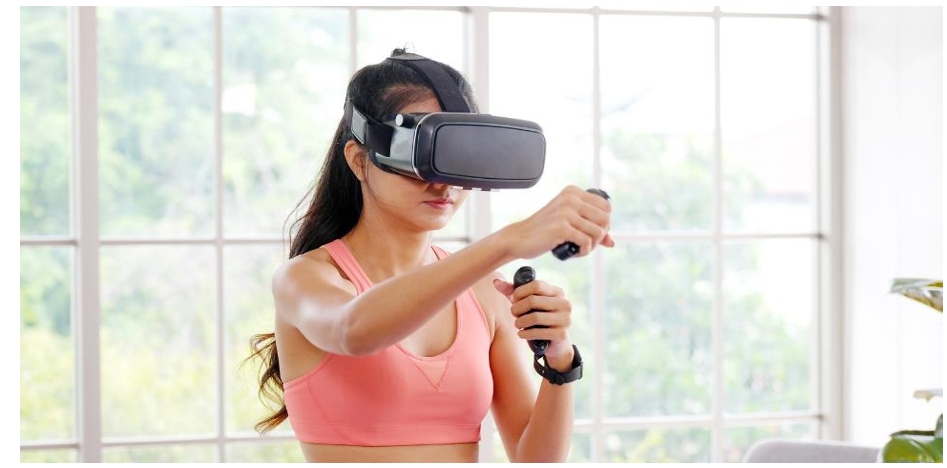
What makes gamified workouts feel different from the gym?
A friend introduced Annabella to a dance game which she almost didn’t try. “I was like, really? A game?” She says. That night, music filled the room; bright colors flashed as arrows moved across the screen her body followed the beat without overthinking. “It didn’t feel like a workout,” she says. “It was entertaining.” “I didn’t even realize I’d been moving for 40 minutes because I was so absorbed in the game.” That’s not a small detail. That’s the whole point. This is because traditional workouts make you hyperaware of time. Research published in Frontiers in Psychology shows that gamified activities lower perceived exertion, making exercise feel easier than it actually is. When a game holds your attention, time stops being the enemy. Your brain tracks rhythm, patterns, the next move, the next score and your body follows. Games hook us through instant feedback, small wins, and a sense of constant progression. That’s exactly what Annabella said keeps her coming back: “Gamified workouts give immediate feedback… Seeing XP, levels, or badges hits a different part of your brain than just counting reps.” When people ask, “Is that really exercise?” I think a better question is: If you’re moving, sweating, and staying consistent… does it matter what it looks like? Because the night that changed Annabella’s routine didn’t look like a workout. It looked like music, bright colors and fun. And somehow, that made it easier to show up.
"How do home workouts remove gym intimidation for women?"
According to Gym-Timidation: Have You Experienced Gym Harassment? - Sustain Health Magazine many women change or avoid gym workouts because of fear of judgment, unwanted attention, or feeling scrutinized while exercising. For Annabella, consistency didn’t come from trying harder; it came from removing pressure. At home, there are no mirrors, no strangers, no feeling of being watched. “You’re just in your space,” she says. That comfort lowers the barrier to starting, which makes showing up easier. “Multiplayer challenges keep me motivated because I want to show up for my friends, not just myself,” she explains. Showing up is no longer out of obligation or guilt; it’s because you have people waiting for you. That transition changes the meaning of consistency and instead of discipline, it’s delightful. “Fun is the number one thing,” Annabella says. “I’ll skip the gym if it feels like a chore, but I’ll play motion games every day.” And when movement feels comfortable, social, and enjoyable, consistency stops feeling like effort.
"How can I start gamified fitness tonight?"
Instead of planning a workout or downloading a program, notice what feels easiest to begin. Clear a small space, put on music then try something playful—dance, rhythm, or movement that makes you curious instead of self-conscious. If you’re smiling and slightly out of breath at the end, it counts because play, reward, novelty, and connection aren’t distractions from consistency; they’re what makes it possible. Maybe movement was never supposed to feel like punishment. Maybe it was always supposed to feel like play and maybe that's why some women stick with it for years. So tonight, the question isn't "how hard can you push yourself?" It's "what kind of movement do you actually want to return to?" Find out more by listening to the podcast linked below.
WHY SOME WORKOUTS STICK AND OTHERS DON’T - Tea with Tee | Podcast on Spotify
Primary interview conducted (316) January 24, 2026 - YouTube
Here's a link to our social media teaser (1) Aliri on X: "The gym feels like punishment But dancing in VR feels like play That’s not random that’s psychology Want the full breakdown? Read here https://t.co/Kz9UlJtfyu https://t.co/XywliQfJI5" / X
Here is a link to our social media post (1) Aliri on X: "What if consistency isn’t about discipline but friction? Some workouts feel heavy before you even start. Read the full blog here on hubspot https://t.co/Kz9UlJtfyu #GamifiedFitness #FitnessPsychology #WomenInFitness https://t.co/9MT0UUV25A" / X